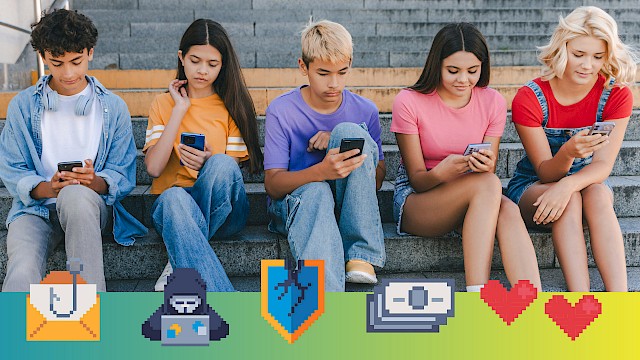
More and more young people own a debit or credit card and they spend a lot of time on the internet. They chat, shop and play games. This also puts them in the sights of fraudsters.
27.11.2023 –These are the five most common scams:
Phishing:
Fraudsters usually try to obtain login details or account information with fake e-mails or text messages. You can identify the messages by spelling mistakes, unusual links and fake sender addresses. Remember: reputable companies never ask for personal data or login information via email or SMS.
Online shops:
Be suspicious of luxury bargains and particularly tempting offers. Check trustmarks, e.g. "Trusted Shops", contact information, ratings and the general terms and conditions before you order.
Fake prince:
Don't make any advance payments if you are promised the gift of a million dollars. Delete such messages immediately.
Love scams and sextortion:
Be careful when dating online and don't give out too much personal information about yourself. Do not share intimate pictures with strangers.
Manipulated links in social media:
Don't click on links indiscriminately, even if they come from friends. It's better to ask first if something seems suspicious.
Protect yourself from card misuse: https://www.card-security.ch/en/types-of-fraud/
Read more News

People represent the biggest security vulnerability
Technology makes cashless payments safer than ever before. Scammers know this too. That’s why they… Read more
Last chance: A mammoth competition
Protect yourself against phishing and win a prize! Don’t miss Card Security's mammoth… Read more
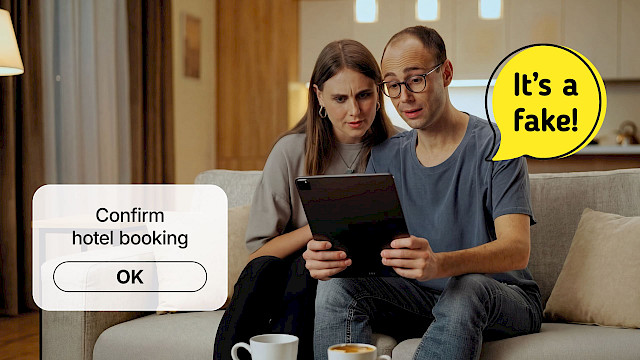
#Watchout – including when you are booking your holidays
«Confirm hotel booking» is the subject line of the email from the online platform. If you don’t… Read more
Big competition
Take part in this major Card Security Competition which closes on 14 October 2026 and, with a bit… Read more