With LINDA against phishing!
Debit and credit card fraud
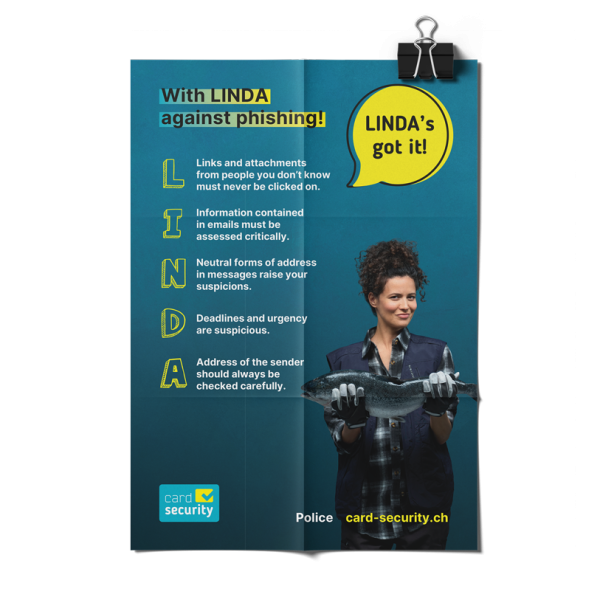
Debit and credit card fraud usually takes place online. That’s why #watchout is important: Stick to LINDA. Each of the letters of her name stand for a mnemonic that you can use to prevent card offences:
- L = Links and attachments from people you don’t know must never be clicked on.
- I = Information contained in emails must be assessed critically.
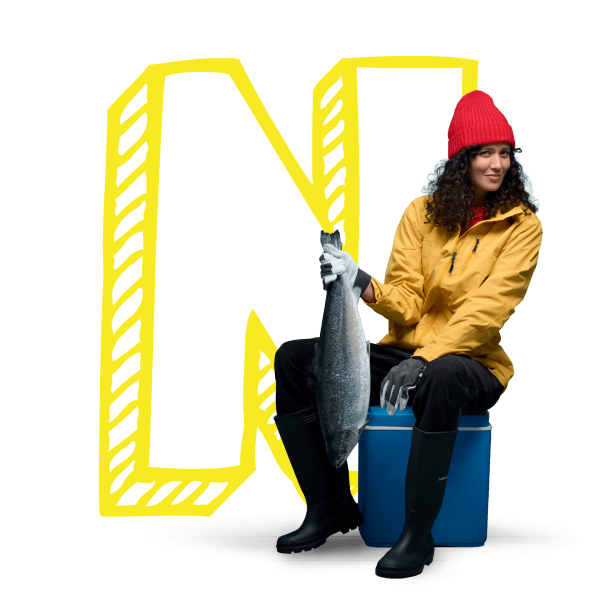
- N = Neutral forms of address in messages raise your suspicions.
- D = Deadlines and urgency are suspicious.
- A = Address of the sender should always be checked carefully.

Links and attachments from people you don’t know must never be clicked on.
- If you click on this sort of link or open an attachment, your personal data may be stolen or your device may be infected with a virus.
- So always be careful with links and attachments from unknown senders!

Information contained in emails must be assessed critically.
- If you click on this sort of link or open an attachment, your personal data may be stolen or your device may be infected with a virus.
- So always be careful with links and attachments from unknown senders!

Neutral forms of address in messages raise your suspicions.
- Fraudsters often use impersonal forms of address such as "Dear customer" or "Hello user" instead of your name.
- This shows that the company doesn’t know your correct name. In addition, your bank or card provider will never contact you by email to ask for information.
Deadlines and urgency are suspicious.
- Scammers often use urgency and time pressure in emails as a psychological tactic to pressure you into making quick, rash decisions.
- If you receive an email wanting an urgent response, you should check the message carefully and, if necessary, contact the sender directly using the official contact information.
- Also remember this: Your bank or card provider will never contact you by email to ask for personal details.

Address of the sender should always be checked carefully.
- Fraudsters often use fake email addresses that look deceptively similar to the real sender’s address.
- They often change just one letter or use a domain that is almost identical with a trusted domain.
- If you have any doubts, you should not use the contact information in the email.

In-store shopping and cash withdrawals
Card payments are completely secure thanks to state-of-the-art technologies. In Switzerland, cardholders can also make contactless payments of up to CHF 80 free of charge. The following seven points will help you protect your cards and shop safely.
Settings for your payment card
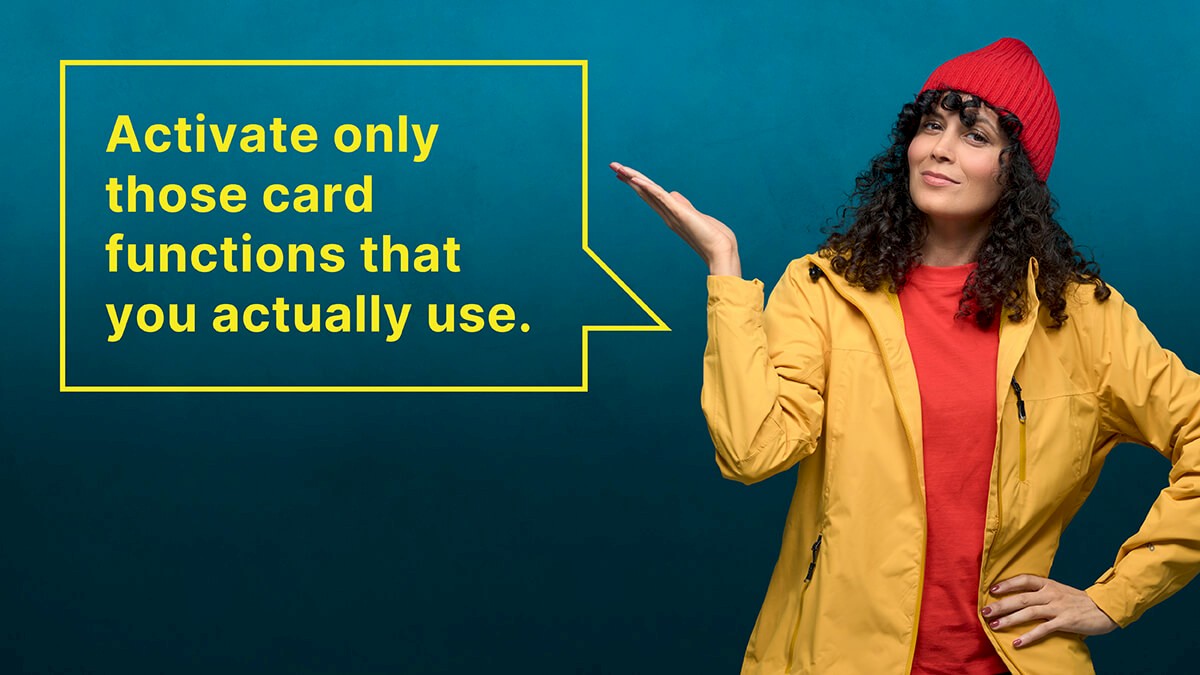
Set purchase limits and turn off card features that you do not use regularly. The options for managing card functions of the new debit cards in the self-service portal vary from bank to bank. Contact your bank if you need help with this.
- Buy goods online
- Withdraw cash
- Shop in-store
- Make contactless payments
- Temporarily disable your card
- Magnetic strips (generally not required in Europe)
Geographical settings
Also check the geographical settings of your cards and restrict their use in certain regions. If you have any questions, your card issuer will be happy to help.
Tip
Stick a note on your passport reminding you to check the geographical settings of your card before you travel.